
BLOG
Finds and Interests
Some of you may know that I collect vintage photographs and negatives. I built a website called History in Photographs to highlight and share the collection. These are more than just simple snapshots; they give us a glimpse into history and leave us with questions.
I’ve selected a few of the most intriguing and am excited to share what some experts have told us about the hidden narratives and stories behind each photo.
For these photos, we collaborated with Meghan Boehmer, a historical interpreter, reenactor, and writer who has traveled thousands of miles to research historical locations, records, and figures. She has agreed to share her expertise in period clothing with me, hoping to enhance our understanding of the subjects in the photos. Please take a look at what she was able to tell us about this photo.
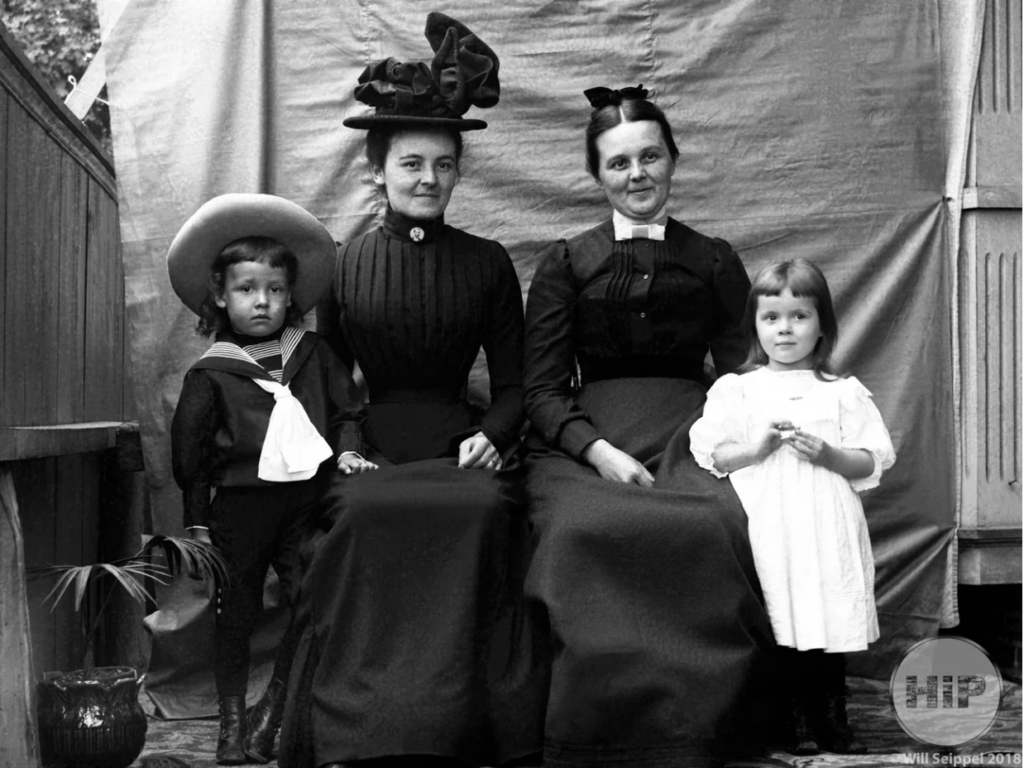
Children’s clothing is a relatively new phenomenon in the history of fashion. It wasn’t until the early nineteenth century that boys and girls began to dress differently. The first boy’s clothing in Euro-American fashion was a skeleton suit, called that because of how snuggly it fit the body. It functioned like a jumpsuit, with the jacket and breeches buttoning together to form one item of clothing. We typically see this style in white or blue, with a white collar peeking out from the top. When Queen Victoria dressed her young son, Edward, in a sailor’s suit, that style became the height of fashion for young boys for decades.
By the time boys were old enough to attend school, they began wearing knickerbockers, as seen in this photo of a boy. Knickerbockers are knee-length trousers that button at the knee, typically worn with stockings underneath. Young girls, like the one in this photograph, wore dresses with considerably shorter skirts than their mothers did. They would continue to wear this shorter hem as teenagers, adopting the longer women’s fashion only when they were considered adults.
The two women in this photograph are also particularly fashionable. Women’s fashion at the turn of the century often featured a blouse with decorative elements in the front. The woman on the left wears a bodice with large pleats and a high collar, featuring closures in the back, which suggests she has someone at home who can assist her with buttoning her clothing. The high collar was a fashionable look and was often accessorized with a brooch, in this case, a photographed cameo. Her hat straddles two eras. At the end of the 19th century, women’s hats were relatively small; this one emulates a men’s boater hat that became popular at the turn of the century, but it has the addition of voluminous fabric decoration that takes steps toward the flamboyantly large hats that became popular at the beginning of the 20th century. The woman on the right wears a button-up shirt with pin tucks and a slight puff to the sleeves. The tiny necktie at her neck was especially fashionable at the turn of the century.