
BLOG
Finds and Interests
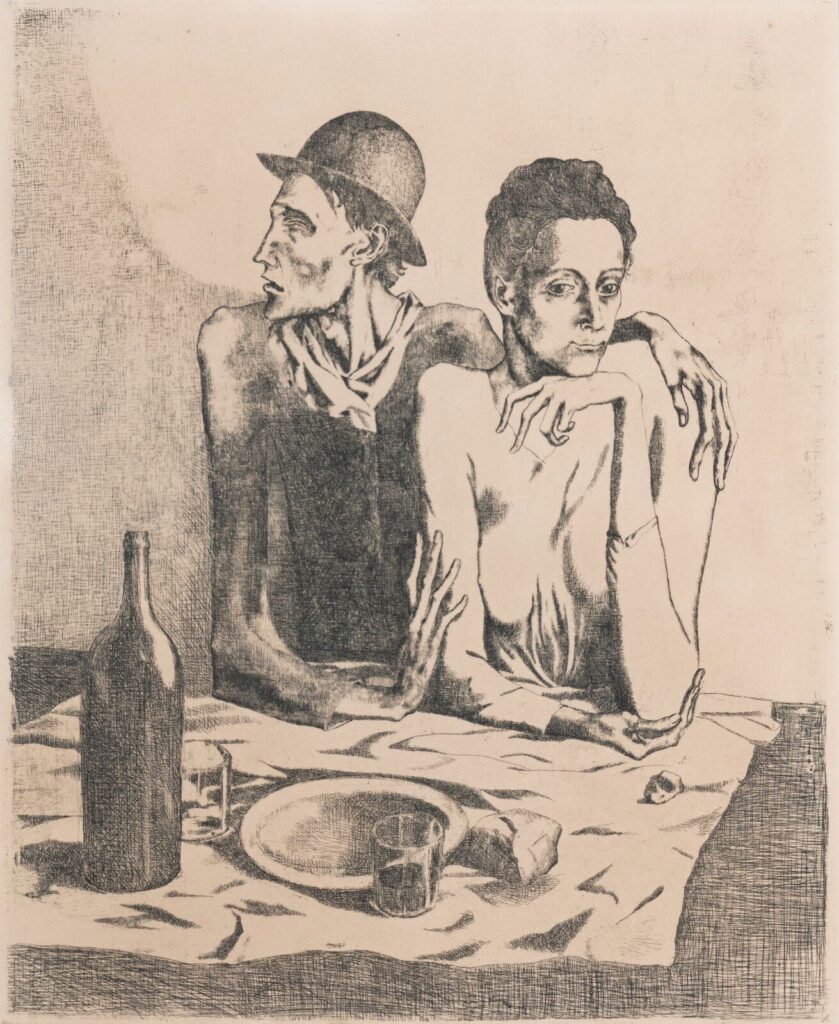
Our WorthPoint Price Guide updates daily, with thousands of new items streaming in from our industry partners. I like to try to single out a few of my favorites to share with our followers. There’s usually a good story behind so many of these pieces, and sharing my passion for antique and vintage items is the best part of my job. A recent sale featured a drypoint etching and a linocut, both by Picasso. Let me tell you about these two works and what we can learn about Picasso and his etchings. This was one of the more interesting sales to come from our partners at Freeman’s recently.
Picasso at Auction: Two Rare Prints, Two Techniques
Pablo Picasso was a prolific and iconic artist, so whenever anything associated with his work comes up at an auction, collectors and curators are always interested. Recently, a drypoint etching by Picasso, part of an edition of 250 titled Le Repas Frugal, sold at auction for $140,800. Picasso created it in 1904, about the time he began experimenting with etching in his work.
What Is Drypoint Etching? Understanding Picasso’s Le Repas Frugal
Drypoint etching is the process of carving an image into a surface, usually metal or plastic, creating lines with rougher edges called “burrs.” The technique creates a muted look for prints, which makes them seem almost ethereal. The image he created, showing a couple who appear to be down on their luck, is raw and conveys a sense of despair, done in simple black and white, with a bit of blurring on the lines. Art dealer Ambroise Vollard published the piece.
Picasso’s Linocut La Dame à la Collerette: A Portrait of Jacqueline Roque
In the same sale, another work by Picasso, this one a complete contrast to the drypoint etching, also sold. Picasso created it in 1963, in an edition of fifty signed and numbered prints, which helps collectors and museums keep track of important works. The print, entitled La Dame à la Collerette (Portrait de Jacqueline), was a linocut. This technique involves cutting away space on a piece of linoleum and inking or painting the remaining raised part to make a print. The subject is Jacqueline Roque, the artist’s second wife. It sold for $48,000.
Drypoint vs. Linocut: Two Printmaking Techniques, One Remarkable Sale
Drypoint is an intaglio technique in which ink flows into the recessed scratches on the surface of a metal or plastic plate—the opposite of a linocut, where only the raised part of the surface is inked and printed. The inclusion of two amazing works in the same auction definitely makes this sale significant, showcasing Picasso’s variety of techniques and styles over the course of his life.
If you want to track the value of Picasso prints and other works on paper, search the WorthPoint Price Guide to explore past auction results and stay on top of the market.