
BLOG
Finds and Interests
Our WorthPoint Price Guide updates daily, with thousands of new items streaming in from our Industry Partners. I like to try to single out a few of my favorites to share with our followers. There’s usually a good story behind so many of these pieces, and sharing my passion for antique and vintage items is the best part of my job.
With so much new data coming in daily, I never quite know what will turn up. This week, I stumbled across something truly out of the ordinary—an auction that featured Swedish “plate money,” a piece rarely seen at auction.
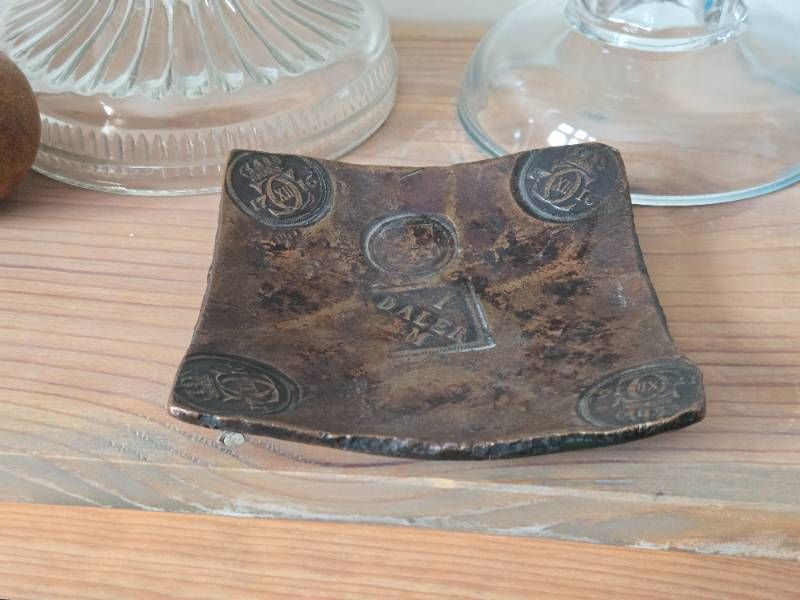
There are lots of collectors of old coins, paper currency, and other numismatic materials, but plate money was new to me. It began in Sweden during the 17th and early 18th centuries, when European countries were determining their currencies and developing their economies. During that time, most countries based their money on the precious metals contained within their borders. Countries with abundant silver or gold deposits could establish a monetary system based on the weight of those metals.
Sweden, during the reign of King Gustavus Adolphus (1611-1632), had success in conquering most of the Baltic landscape, but struggled with having enough naturally available metals and alloys to create a global currency that could support the tormaktstiden (Era of Great Power), which was happening as Adolphus was carrying out battles to protect Protestantism.
The country had large copper deposits, so they mined it. The government sold copper, an essential material for the manufacture of cannons and other weaponry, in exchange for silver. The King and his economic advisors also created massive amounts of copper coins, hoping to establish that as currency.
With so much of the copper used for currency, less was available for export, which caused problems with sales of the metal to other countries. Rather than the large amount of copper coins becoming valuable, the supply impacted demand, and the currency lost value among the nearby nations at the time.
King Adolphus died in 1632, and his daughter and heir to the throne was only seven at the time, so a Regent was appointed who directed more copper currency to be made in thick plates, which were much heavier than coins. It was difficult to transport, requiring a farmer or a soldier to find a horse or other beast of burden to carry the heavy currency plates to markets to use as a means of payment. Sweden manufactured the plates between 1624 and 1768, and while they were impractical and caused a somewhat economic crisis, that is what makes them collectible today.
One of our valued Industry Partners, Surplus Liquidation, recently had a piece of this form of currency at an auction (IMAGE #1), fetching a respectable price of nearly $700 for a plate bearing the value of 1 Riksdaler. The money is unusual and therein lies the attraction for some collectors. It was a short-lived form of currency that failed to create a thriving economy; instead, it negatively affected trade. Still, as an example of an early economic system, the plates are unique and a great reminder of that period of history.